Showing posts with label intellectual property. Show all posts

Copyheart: Caring by no longer caring

Okay so, I'd been thinking about what to do about a minor conundrum I've been having. Namely, what to do about stuff on this site I'd created that either mixed hints of non-libre content or that I'm not proud of enough to release formally under the CC-BY-SA. For one thing I wasn't sure what to do about the text of the site; I didn't think anything I'd written apart from Stablehand posts was quite awesome enough to just shout "everything here is a quality resource!", which is what the CC-BY-SA had usually evoked in my mind.

And, well... long story short, the answer I guess is ♡ copyheart.

So what's that? It's a "nicer" variant on the idea of a copyright notice, which instead of reminding readers that the law restricts every use by default, reminds them that the author is fundamentally okay with the diffusion of their ideas. This is my version of it:

♡ 2014 TAKUMI. Copying is an act of love. Please copy, adapt, and share.

Some people might complain that this is the most hippy-dippy "copyright" notice they've ever seen (indeed, I've seen that), and you know what? I absolutely agree. It makes me feel like the biggest dork ever to put that in the footer. But at the same time it makes me feel way less like a hypocrite than writing the "truth" (the gritty truth) that by not taking any action to liberate my stuff, I choose to censor people by leaving all rights reserved. Which would suggest that I'm okay with that, and I'm not.

A really cool thing about copyheart is that it really neatly solves the problem I'd been having with fan art, which is that it seems intuitive to feel one can't liberate it, but on the other hand, I honestly didn't care what happened to it, and felt like there was something especially wrong with "retaining the right to censor" on things that weren't even "mine". Now, without trying to use the CC-BY-SA and open the can of worms of what happens when people have to use a libre licence on fan works, I can communicate my intentions that they be used and that I not act as a second barrier (after the original creator) to using things.

When you stop and think about it, it's really rather elegant for a handful of corny-sounding words without any legal fortifications built up behind them. (Which, by the way is why nothing I've already made CC-BY-SA is going un-CC-BY-SA any time soon, nor am I going to stop using it for my more substantial original things. It's like an extra safeguard for things you really, really want to stay libre.)

Accordingly, I may start bringing some of my fan things back onto Sangkara when I make them and when they're "good enough", particularly stuff for this project called "RESTART" (a spin-off to OFF) that I'm thinking about making.

And by the way, if for whatever reason you need to type copyheart, and you're using Linux like me, it's really easy to add it to your compose key! Find your .XCompose file in your home directory and put in the following line to type copyheart as "o3":

<Multi_key> <o> <3>   : "♡" U2661 # Copyheart

You'll need to have the XCompose file set up first but in my opinion it's the best way to type special characters (you can type practically anything) so it's worth it.

What's actually wrong with that old "download a car" ad

I finally thought about it and realised today why exactly that old "PIRACY. IT'S A CRIME" ad was so grating and stupid in the eyes of not just me but a lot of other people. (Trigger warning for Holocaust on the last one, but it's my favourite.)

And here's the reason it's stupid: it makes an improper logical leap.

It equates copyright infringement with theft metaphorically, then equates theft with crimes literally, and ignores that distinction to make the otherwise possibly reasonable assumption that if A → B and B → C, then A → C. That is:

  1. Piracy is (metaphorically) theft.
  2. Theft is (literally) a crime.
  3. Piracy is (???) a crime.

And actually, to really make the argument it's making—that because there is a law you shouldn't break it—the ad also pretty much has to add an implied fourth term that because there is a law against something it must be inherently harmful/evil, so it's more like:

  1. Piracy is (metaphorically) theft.
  2. Theft is (literally) a crime.
  3. Crimes are harmful and should not be done.
  4. Therefore piracy is harmful and should not be done.

Now let's try that same idea with different things.

  1. The government is a (metaphorical) octopus, extending its arms into everything
  2. Octopuses are (literally) mollusks
  3. Most mollusks live underwater
  4. Therefore the government probably operates underwater

Government. It's a deep-sea operation.

  1. Your brain is (metaphorically) your central computer
  2. Computers are (literally) electronic computing devices
  3. Electronic computing devices are usually made with plastic, metal, and silicon
  4. Therefore your brain is probably made with plastic, metal, and silicon

Brains. They're a technological wonder.

  1. Your body, according to the bible, is (metaphorically) a temple
  2. Temples are a type of religious building.
  3. Religious buildings in Christianity (or at least the statelier ones) often contain stained-glass windows, spires, and/or gargoyles.
  4. Therefore you should be asking why your body doesn't have awesome gargoyles.

Bodies without gargoyles. It's a missed opportunity.

There could well be some little nuance I'm missing here since these sound a good deal more obviously absurd than the original, but I think this is the gist of it.

Tenkai: An Idea...

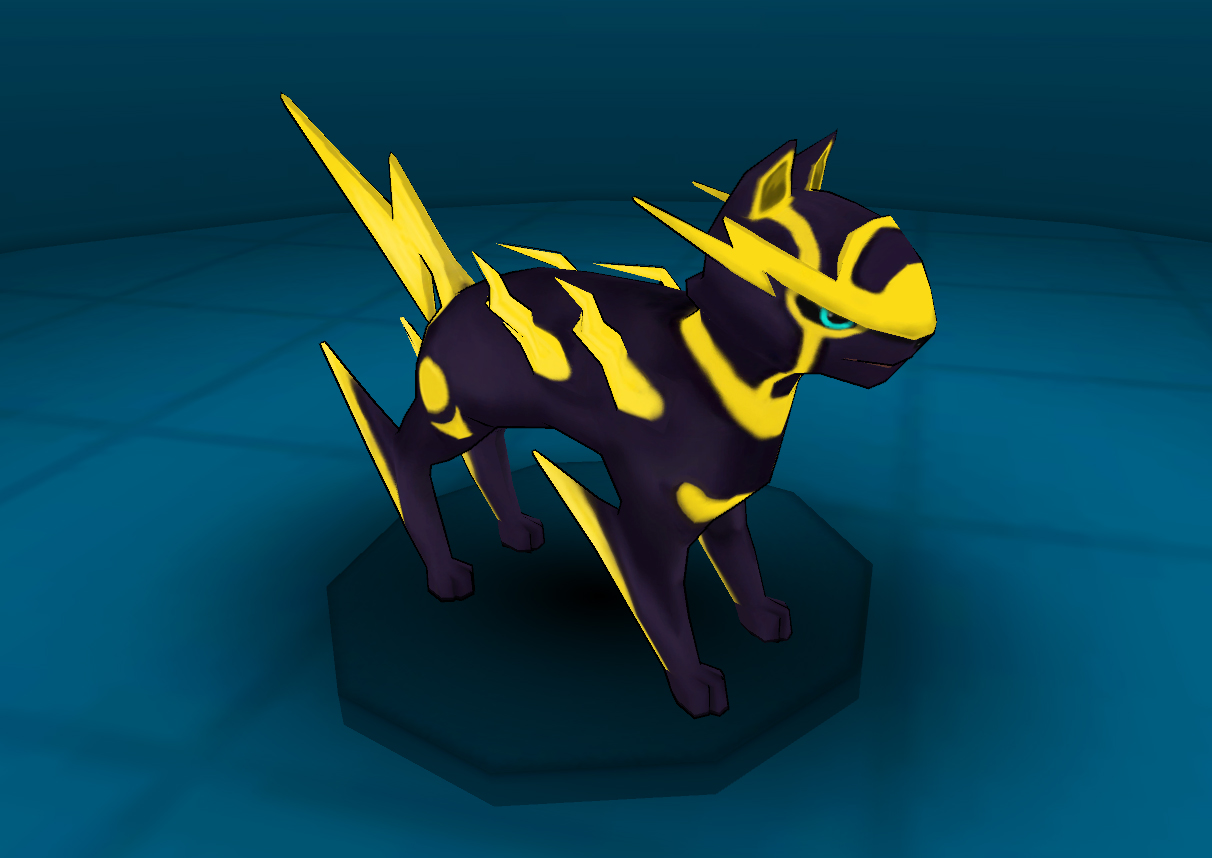
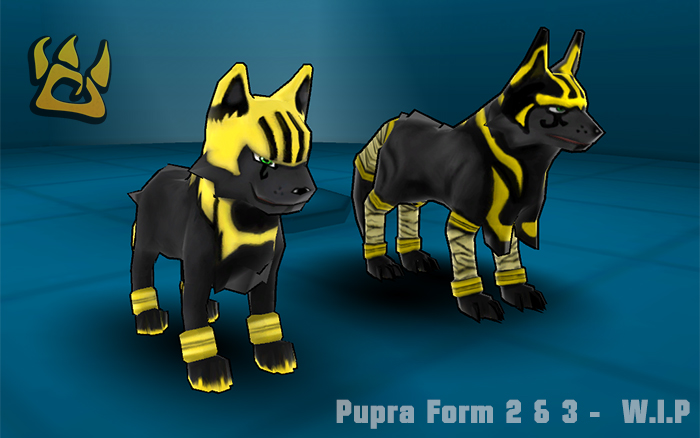
So, I tried out Epic Pets recently, and I was pleasantly surprised with it. I loved the designs for the lightning cat and the later forms of the earth (?) jackaldog, as well as the textures and interface.

But at the same time, it troubled me that this would mean I'd be getting into yet another nonlibre fandom that would have to remain separate from my original work, and which by putting restricted ideas in my head would limit my creativity.

Then I suddenly got an idea. What if when I revisit Tenkai—my old, kind of vague monstergame idea—I make it a libre monsterpet game? I'm not sure what licence I'd use, but definitely NOT anything more restrictive than the CC-BY-SA or the GPL.

Do you know what that would mean?

It would mean something that's like Pokémon or Monster Farm, or indeed, Epic Pets, but which you could freely use the mons from in ANYTHING (anything), even commercially, as long as you were comfortable releasing it under the same licence as Tenkai. And you wouldn't even have to label your fanmons "fan art" when posting on deviantART or something, unless you wanted to, of course. We're talking open source culture here.

No more risk of takedowns. No more "well it's technically illegal" or "well they haven't come after us yet so we don't know" or "well it's a grey area..." bullshit. Everything. You. Made. Would. Be. Lawful. Period.

Currently I'm toying with various concepts for how to make the game interesting and different, because even though it's kind of supposed to be a "libre alternative to existing things", I still don't want it to just be more of the same. One thing I'm experimenting with is the idea of giving each creature a completely different kind of control system. For instance, among the creatures I have concepted up so far, the "Sonata Snake" would be controlled by playing notes with the keyboard, and maybe, like, depending on what the other monster was doing in battle it would give you a note and you have to play a particular chord to evade, or another one to block, or another one to grab it and constrict it. And if you played particular sequences of notes/chords or something, you might be able to do awesome combos. Another, the "Cutlark" (I'm not sure whether I like that name or not) might rely on using quick reflexes and careful timing to slash and evade with the cursor. I've always kind of liked monsterpet games, but at the same time often felt like they're too much about luck and monotonously spamming the same attack. And at the same time, recently I've really gotten into games like Robot Unicorn Attack and the Flappy Bird imitators (I guess you might call those arcade games?) and I kind of like their fluid, continuous pacing, and how simple and intuitive the controls feel. I feel like if I could combine those two experiences (cool monsters in an interesting world and a fluid and intuitive, relaxing yet challenging control interface) it would be a really interesting game.

Rough concepts for Cutlark, Sonata snake, and the logo.

Initially I wanted to make the new Tenkai a Stablehand spinoff and give each of the monsterpets the ability to "archetype" to any attribute at any time, with their abilities and strategy changing a little, but... I don't know about the status of that now. I think it would go a long way toward making the game more interesting, giving each individual monsterpet more individual character (I may not have mentioned this before, but in Stablehand, I see each character as being more able to use each attribute as they get "better" at it, with each person's ability to get "better" at each attribute different, and that would come into play in Tenkai too), and making especially multiplayer type things potentially more unpredictable and interesting. On the other hand, though, I'm not sure how well Stablehand attributes and the kind of creatures I'm actually creating for the new Tenkai would play together. The stuff I created for the "old" Tenkai definitely seems like it would fit though, and there's a good chance I'll recycle it back in, so... I'm not sure this isn't going to happen either.

(Another thing I thought about for a brief moment, if Tenkai does turn out to be some kind of Stablehand spinoff, is mystery beings as monster companions. It would be kind of weird because they're sentient and can even talk, albeit in their own language, but then again... I guess that didn't really stop Digimon.)

So... yeah. Those are my plans for Tenkai right now. It will probably take a lot of time for them to really materialise into anything, but I thought I should share them with you.

This video is no longer available: The Day One Garry's Incident Incident

Watch this video if you like video games, Let's Plays, YouTube reviews, or regularly create ANYTHING.

It's extremely important that everybody understands the consequences of sites like Youtube giving in to pressure from IP industries and allowing them to take ANYTHING down off the site without fear of anything happening to them, even if they use notices that make absolutely no sense and abuse the DMCA for censorship reasons. You could make something under fair use, NOT infringing copyright, and get your account closed under a copyright law, with potentially no way to argue the fact you have NOT violated the law.

I can't stress this enough. This is really damn important to be aware of if you don't want to be senselessly prevented from sharing audiovisual content on the internet. Youtube is the worst but you may not even be safe on other sites. Things are seriously screwed up.

Watch the video. TotalBiscuit says things more clearly, probably.

Reblog this on tumblr if you want, however much good that may do...

Access drives preservation. So, if you think of, "well, why don't we just go and encrypt it and put it in a vault, and we'll be able to look at it in 70 years, or something like that...", I think that kind of a "dark archive" is the worst possible idea.

I think it's keeping things in use, active, that keeps a part of the mind-share, keeps people knowing about it, liking it, caring for it. So I think that the best way to preserve things is to make things accessible. It may sound a little... "un-obvious", but especially in this digital age, where it's so easy to forget... If you take things away for a generation, it's as if it doesn't exist. So everything we do is open-source, and all the things we do we try to give away.

Brewster Kahle's words on preserving knowledge at the Internet Archive. I think they also briefly explain exactly what is wrong with overly-extended copyright terms, overzealous enforcement, and legal protections on DRM.

Andy Baio on sample culture and on copyright as "The New Prohibition"

In the above video, Andy Baio discusses his experiences with copyright, music, and remix culture and how recent events have made him concerned about the future of every single creative person on the internet that dares to borrow the smallest snippet of anything at all without permission, in an era of mass automated lawsuits where copyright holders have increasingly "turned copyright into a weapon".

He asserts that fair use does not exist—at least not outside of a courtroom—because it is not a law and only a courtroom test*, and when settlement letters are so convenient and reliable as a source of income, anyone can be the target of a lawsuit at any time. At the same time, he worries about how far the recent trend to "criminalize creativity" can possibly go as fewer and fewer people can even understand why building on other works should even be unlawful in the first place:

Every time I'd look at this and be like, "Should these be illegal?"
[...] "Does it feel right that these are illegal?"

This is a great video and if you're at all interested in copyright or even fan art in general, you should watch it.

*This is actually incorrect. It doesn't negate his overall point though.

Four good reasons why protecting the public domain is important

Number one:

Subterranean unicorns. The Swiss scientist responsible for the piece this illustration went with suggested not only that mountain springs connected with some kind of underground river system from which they got their minerals, but also (probably not too seriously) that there might be dragons and unicorns living there. Reasonable, right? If you can't find good evidence of them living anywhere above ground, then clearly they must be hiding underground if anywhere. And of course, doesn't it nicely explain why dragons are so often found in caves even in spite of their elusiveness above ground?

The only problem is that I have no idea what a subterranean unicorn would eat, given that it would be too deep for most plants and algae with the exception of maybe some really long plant roots. Worms...? Fungi...? I'm not really sure how far down soil bacteria and microscopic protists go, though it's kind of funny to imagine an underground unicorn taking up huge mouthfuls of dirt indiscriminately to try and extract them.

Going back to dragons, just look at this other illustration:

A reasonable reaction, if to not as reasonable a threat.

Number two:

Pterobats. They were supposed to be pterosaurs, but the artist didn't know that, and thought they were some kind of weird flying batrat. It amuses me that the silhouettes in the background conform fairly well to real pterosaur skeletons but then the ones in the foreground have to have more reasonably mammal-looking faces.

Number three:

Colourful and bizarre bestiaries. Among these you'll find some beautiful renderings of familiar fantasy animals, as well as some... less familiar things like the vegetable lamb. Seriously, go read about the vegetable lamb... it's kind of surreal.

Number four:

The "19th-century engraving style". This is a bit more pedestrian than the other three, but in my opinion, it deserves a mention of its own just because it's so distinctive. Ever notice that odd half-flat, half-three-dimensional look of old engravings with immense detail but all too often just stopping short of feeling entirely real and believable? Especially combined with an uncoloured background (which was not uncommon since many of these had to be coloured manually), it can have a strangely distant and empty quality to it. Personally I think it's really interesting.


Whenever I see anything like this, it always amazes me that it possibly could have been forgotten by the general public and pop culture—really, why did I never hear of the vegetable lamb until recently? How does stuff that weird ever manage to slip away?—and at the same time makes me really thankful somebody went to the trouble of saving it. What got me thinking especially about this lately was the idea of modern (or somewhat modern) books, games, whatever that get abandoned by the creator or copyright holder and then seem to just vanish, almost like a modern equivalent. However, still shielded by copyright, they don't even necessarily have the benefit of people trying to preserve them or spread the word given the risk that depending on the method of promotion, someone might get angry! Communities still re-emerge around them sometimes, but may still be scolded by others should they take "questionable" measures just to try to keep the work alive and to circumvent difficulties such as hardware failure that were not an intended feature of the product. (Well, usually.)

I'm wondering, informally, if super-long copyright terms (possibly growing even longer) and a general fearful climate are going to result in more interesting, unusual things being "forgotten" to general culture. But I can't predict the future or change much of anything. What I can do, though, is give you more examples from the past of things I'm glad were not actually lost.

In English, that means that whenever I can find the time to do it, I'm going to be periodically posting what I think to be some of the best of the public domain. I don't know if that will actually solve anything or get anybody else to understand my strange worries, but maybe something good will come out of it.

Maybe.

Whoops!

You may or may not have noticed it, but the errant copyright notice that accidentally got left on the Stolen Heart concept image I posted is now gone. That image was not intended to inexplicably be under a stricter licence than the rest of the Stablehand project, nor was it meant to track people using my images in some kind of covert, nefarious scheme. I'm not even sure a scheme like that would work, come to think of it, though I can only imagine it would be an interesting science experiment to put a copyright notice on one image but not on the other and see whether people heeded the false copyright notice or went to the trouble of finding the actual Creative Commons licence.

In any case, that copyright notice has now been removed. Sorry for the confusion!

An announcement for art, culture, and fans everywhere

Recently I've started taking an unusually great interest in the subject of intellectual property, its ups, its downs, and its abuses (on both sides). And after listening to a couple talks by a man named Lawrence Lessig, I've finally started to decide on what my stance is.

People want to remix, repackage, and transform. It's an outlet for their skills, a way to express themselves, and just something to do when they don't feel like making more "serious" and "original" works. There's something about it that feels more productive than simply mindlessly consuming things, and sometimes a combination brings out new nuances you never would have noticed in the original works if they hadn't been combined. Some copyright holders might not like it, but it's arguably a major part of our culture at this point, to the point that sometimes it just plain makes them look bad when they try to crush it. Some people are literally going and claiming they own the rights to public domain music and even BIRD SONG (not kidding!) just so they can use copyright to gain power over other people. Things are getting disgusting, and if we don't do something about this, we might be in for a day when nobody makes any new works and we just pass around the same 125-year-old books and albums, or it's at least a civil wrong for anybody who isn't part of one of the three big companies that end up purchasing everybody's rights to create a new work except maybe under extremely strict specifications put out by the big guys. A certain newspaper has actually already tried to restrict the use of the letter "T" (no, really, I'm not even joking).

So what can we do?

One option is to start over. If we can't create a fan culture around works from "the big guys", we need to make a new body of works surrounded by less nastiness, less absurdity, and fewer federal agents, a body which anyone can freely create new works from. That body already partially exists, but it's still very small and fragmented compared to all the locked-up strictly commercial stuff out there. It needs some livening up.

And that is why I'm going to licence Stablehand under the CC-BY-NC-SA CC-BY-SA. If you are an artist who enjoys synthesis, adaptation, and—dare I say it—freedom, I encourage you to use a CC licence as well.

Links: